Firetube .vs. Watertube Boilers

Firetube .vs. Watertube Boilers

Choosing the Right Fit For Your Facility

At Icon Boiler, we know that selecting the right boiler technology is a critical decision for any commercial facility. Firetube and watertube boilers are both proven options, but each is designed to support different operational needs. Understanding how they compare can help you make a more informed decision for your building.


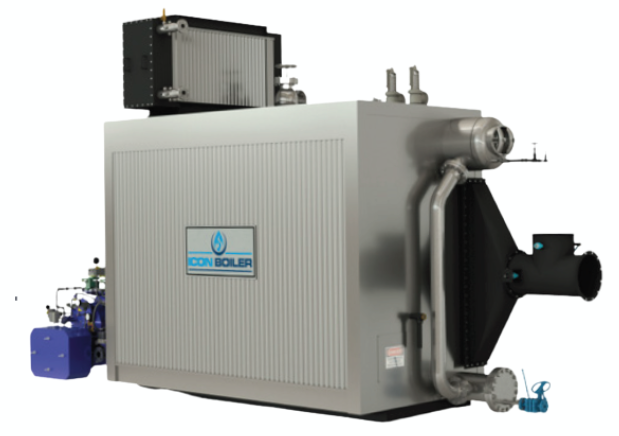
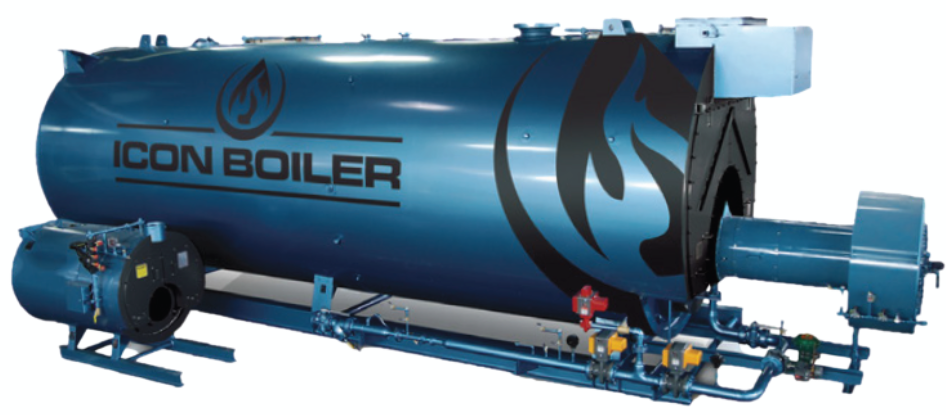
Firetube 

Watertube 
Capacity Requirements  1200 BoHP – 41,400 lb/hr – 40 MM Btu output
Maximum: 2,500 HP (85,000 lb/hr) 
1,160 BoHP – 40,000 lb/hr – 40 MM Btu output
Maximum: 300,000 lb/hr (8,700 BoHP) 
Pressure Needs  Operating Pressure – 160 psig
Design Pressure – 200 psig
(Standard 150 psig, Maximum 300 psig) 
Operating Pressure – 180 psig
Design Pressure – 250 psig
(Standard 250 psig, Maximum 1,250) 
Steam Requirements  Works for saturated steam only (heating water only)  For superheated (radiant or convective), watertube is required. Also works for saturated steam. 
Steam Quality  99.5%  99.5% – 99.9% 
Efficiency  82–83% without economizer
83.5–86% with economizer 
78–79% without economizer
82–83% with economizer 
Site Concerns – Space Limitations  Smaller models available to fit through doors. Generally longer than watertube.  Smaller footprint but generally taller than firetube. Can be customized for shorter length. 
Weight Limits  81,300 lb dry weight
180,000 lb flooded weight 
55,214 lb dry weight
77,025 lb flooded weight 
Load Swing  Handles wide swings in process steam more easily due to larger volume of water. Longer initial startup.  Heats from cold to operating pressure more quickly (less water to heat). Typically has a shorter turndown. 
Maintenance  Easier to maintain than watertube. Maintenance completed from outside of unit.  Tube bending offered for quicker replacements. More refractory areas of repair. 
Fuel/NOx  Burner neutral. Can use a number of fuels (natural gas, No. 2 fuel oil, hydrogen, combined gas and oil, propane digester, solid fuel).
< 9 ppm NOx
< 30% FGR
< 15% excess air 
Burner neutral. Can use a number of fuels (natural gas, No. 2 fuel oil, hydrogen, combined gas and oil, propane digester, solid fuel).
< 9 ppm NOx
< 30% FGR
< 15% excess air 
Financial – Lead Time  On average, costs 40–45% less than watertube (boiler only).
10–18 week lead time 
On average, costs 40–45% more than firetube.
26–32 week lead time 
Longevity (depending on maintenance)  18–20 years  30–40 years 

Both boiler types can perform reliably when applied correctly. The right choice depends on your facility’s capacity needs, space constraints, maintenance resources, and long‑term operational goals.

Icon Boiler Announces Partnership with Sterlco in the Southeast

Icon Boiler Announces Partnership with Sterlco in the Southeast

Icon Boiler has announced a new partnership with Sterlco. As part of the partnership, Icon Boiler will now offer a wide range of Sterlco’s high-quality steam control products to customers in North Carolina, South Carolina, and Georgia.

“We are extremely pleased to partner with Sterlco to offer our customers even more options when it comes to quality boiler equipment,” says Myron Burnett, General Manager of Icon Boiler. “Sterlco has a long-standing reputation for innovative and reliable products, and we look forward to working with them to meet our customers’ needs.”

Sterlco’s product line includes condensate units, boiler feed units, pumps, temperature control valves, strainers, steam traps, and hand radiator valves. The company’s products are known for their precision engineering, reliability, and ease of installation and maintenance.

The partnership will allow Icon Boiler to further expand its service offerings to customers in the region, while also providing Sterlco with an even wider distribution network in the Southeast. The increased availability of Sterlco’s products through Icon Boiler will ensure that customers receive prompt service, support, and reliable parts.

The Benefits of Boiler Preventative Maintenance

The Benefits of Boiler Preventative Maintenance

Why a Preventative Maintenance Schedule is Essential for Your Commercial Boiler

As a commercial boiler service and equipment provider, we understand the importance of keeping your facility’s heating system running efficiently and reliably. That’s why we cannot overemphasize the necessity of a regular preventative maintenance schedule for your commercial boiler.

Regular boiler maintenance reduces the likelihood of major breakdowns, prolongs the life of your equipment, and saves you unnecessary costs. Here are some reasons why a preventative maintenance schedule is essential for your commercial boiler.

1. Boosts Efficiency and Performance

Regularly servicing your commercial boiler ensures that it runs at optimal efficiency and performance. During maintenance, our technicians will check all components, clean parts, lubricate moving parts, and ensure they are functioning correctly. Therefore, the system works without undue stress to all parts, leading to better heating output and heat transfer, and reduced downtime.

2. Saves on Energy Bills

An efficiently running boiler saves on energy bills. A poorly maintained boiler consumes more fuel and energy to operate, which translates to higher utility costs. An annual maintenance schedule can reduce energy wastage by up to 40% and save you money on your heating bills over time.

3. Minimizes Repairs and Downtime

A commercial boiler breakdown unexpectedly halts your heating and operations, which can be detrimental to any business that relies on a productive work environment. Neglecting boiler maintenance increases the chance of repair and emergency service calls, leading to costly equipment repairs and downtime. However, a preventative maintenance schedule can identify problems early and mitigate them promptly before they become a significant issue.

4. Ensures Safety and Compliance

Regular boiler maintenance is crucial for ensuring the safety of your facility, employees, and customers. Faulty boilers can lead to carbon monoxide leaks or other hazardous situations. By scheduling regular inspections, our technicians can identify any potential safety issues and rectify them promptly. Additionally, adhering to maintenance schedules helps you comply with industry regulations and requirements, maintaining a safe and compliant working environment.


In conclusion, a regular preventative maintenance schedule is proactive care that saves you time, money, and, most importantly, assures that your commercial boiler operates optimally all year long. Contact us to schedule regular maintenance or have your commercial boiler inspected today. It’s time to keep your facility’s heating system running safely and efficiently.


Let your Icon Boiler representative know if your facility or organization needs assistance in establishing, maintaining, or reviewing your Preventative Maintenance Program. 

Prolong the Life of Your Boiler: Icon Boiler’s Comprehensive Mechanical Support and Repair Services

Prolong the Life of Your Boiler: Icon Boiler’s Comprehensive Mechanical Support and Repair Services

With our R-Stamp certification, we guarantee our expertise in delivering exceptional boiler repairs that keep your equipment functioning at its best. Our licensing for boiler code repairs ensures safe operation and extends the lifespan of your boiler.

Distinguishing Routine Maintenance from Boiler Code Repair

Regular maintenance involves replacing sacrificial elements that break down over time, protecting the pressure-retaining parts. This helps to maintain efficiency and prevent further damage. Boiler code repairs, on the other hand, focus on identifying and addressing defects in the pressure-retaining components themselves.

At Icon Boiler, we are qualified to handle both routine maintenance and code repairs for your boiler, ensuring comprehensive care.

Expanded Services for Maximum Performance

In addition to repairs and maintenance, Icon Boiler offers a range of expanded services aimed at optimizing your boiler’s performance rather than needing to replace the entire system.

  • Boiler retubing: Replacing worn-out or damaged tubes for restored peak performance.
  • Replacing feed-water inlet couplings: Ensuring a reliable water supply and mitigating code issues.
  • Nozzle repairs: Contributing to efficiency and safe boiler operation.
  • Retacking of baffle shelves: Optimizing heat transfer and maintaining boiler efficiency.

Understanding the Common Causes of Code Defects

Boiler problems can arise due to various reasons, so it is crucial to identify the root cause in order to properly fix and maintain them. Below are some common boiler issues that can lead to code defects: 

  • Poor water chemistry: Can lead to oxygen pitting and compromise the boiler’s integrity and performance.
  • Thermal shock: Occurs when hot metal comes into contact with cool feedwater.
  • Accumulation of scale or soot: Lowers heat transfer efficiency and can result in code defects.

Trust Icon Boiler for Unmatched Boiler Repair and Service

When it comes to boiler repair and service, Icon Boiler stands out as a trusted industry leader. With our expertise in boiler repairs, along with the necessary certifications and licenses, we are committed to providing high-quality and reliable service. By choosing Icon Boiler, you can have confidence that your boiler is in capable hands.

Contact us today to learn more about our services and experience the difference with Icon Boiler. Together, we’ll ensure optimal performance, efficiency, and safety for your boiler.

The Importance of Maintaining Daily Boiler Logs

The Importance of Maintaining Daily Boiler Logs

Why Maintain a Boiler Log?

Boiler operators play a crucial role in ensuring the safe and efficient functioning of boilers in various industries. It is their responsibility to maintain and operate the boiler systems to ensure they function as expected and meet compliance standards.

One of the critical tasks that boiler operators need to perform daily is maintaining the boiler logs. A boiler log is a record of a day’s operating conditions, which typically includes information on fuel and water consumption, steam pressure, temperature, and other critical system parameters. Keeping accurate and up-to-date logs is essential for the smooth and safe operation of the boiler.

1. Compliance Requirements

Boiler operators need to comply with regulatory compliance standards to ensure safety and meet environmental regulations. Boiler logs are a critical document for demonstrating compliance with these regulations. Authorities will refer to the log to verify that the boiler is operating in conformance with the regulations. Failure to produce an accurate daily log can lead to significant penalties and legal implications.

2. Boiler Efficiency

Maintaining daily boiler logs is a crucial element of ensuring the optimal performance and efficiency of the system. By carefully monitoring fuel, water, and steam consumption, operators can identify patterns that suggest whether the boiler is working efficiently or experiencing inefficiencies that need to be corrected. With this information, operators can make the necessary adjustments to improve the effectiveness of the boiler and reduce operational costs.

3. Predictive Maintenance

Maintaining proper boiler logs can help operators predict when the system is likely to fail or experience problems. Daily logs form the basis of a predictive maintenance program, helping operators identify trends that suggest the need for repairs or maintenance before a major problem arises. This approach helps to prevent costly downtime and repairs by correcting minor issues before they turn into significant problems.

4. Safety

The most crucial factor when it comes to boiler systems is safety. Boiler logs play an essential role in ensuring that boilers operate safely. They help operators understand critical information about the operation of the system. For example, by monitoring steam pressure and temperature, operators can identify potential safety hazards and take corrective actions to prevent accidents or explosions.

Maintaining proper boiler logs also helps the operators understand the condition of the individual safety components that make up the boiler system. The logs help to ensure compliance with regulations, optimize the performance of the system, and prevent major problems. Boiler operators must take the task of maintaining daily logs seriously and ensure that they are accurate, up-to-date, and complete.


To conclude, it is crucial to emphasize the importance of diligently maintaining daily boiler logs. Neglecting this task can have serious repercussions on the reliability and safety of boiler systems. Boiler operators should prioritize investing sufficient time and effort into keeping thorough and up-to-date logs to guarantee optimal performance and safety.


Let your Icon Boiler representative know if your facility or organization needs assistance in establishing, maintaining, or reviewing your Boiler Log Program. 

Boiler Maintenance: What You Can Do and When to Call the Experts

Boiler Maintenance: What You Can Do and When to Call the Experts

Making sure your commercial boilers receive preventive maintenance is a wise decision. It not only saves you money in the long run by optimizing the efficiency of your boiler, but also extends its lifespan. Regular maintenance can also improve the safety of your workplace and significantly reduce the likelihood of emergency situations.

To ensure that your boiler stays in good working condition, it’s important to know what actions you need to take and what tasks should be arranged with your Icon technician. Refer to the maintenance checklist below for vital information on what you can do to maintain your boiler. These simple tasks include routine checks, which help detect and address issues promptly. Remember, if you encounter any problems during your routine maintenance checks, don’t hesitate to contact Icon Boiler for professional assistance to prevent the problem from becoming more serious.

Routine Inspections

Completed by the on-site facilities operator

  • Check boiler equipment, components, and piping for water, leaks, obstruction, or unusual vibrations or noises.


  • Inspect venting systems to ensure they are not blocked by debris, ice, or snow.


  • Inspect the boiler’s sight port and examine the flame for any evidence of damages or possible soot.


  • Review exhaust temperature, boiler temperature, and boiler pressure to make sure all readings are within the desired range.


  • Check the display panel for error or service codes.


Scheduled Maintenance

Completed by Icon Boiler service technician

  • Test low water cutoff and exercise pressure relief valve.


  • Blowdown, test low water cutoff and feed control(s).


  • Check for water, steam, and fuel leaks.


  • Check settings and test operating and limit control.


  • Blow down water level sight glass and confirm the water level.


  • Visually inspect the condition of safety relief valves for tampering and leakage.


Seasonal Startup

Completed by Icon Boiler service technician

  • Review the manufacturer’s recommendations for the boiler and burner startup.


  • Check auxiliary equipment operation.


  • Inspect burner boiler and controls prior to startup.


  • Start burner. Check operating controls. Test safety controls and pressure relief valve.


  • Perform combustion tests and adjust the burner for maximum efficiency.


  • Visually inspect the condition of safety relief valves for tampering and leakage.


Annual Maintenance

Completed by Icon Boiler service technician

  • Secure and drain boiler annually.


  • Open fireside and waterside for cleaning and inspection. 


  • Inspect gauge glass and replace if necessary. 


  • Clean fuel nozzles or gas burner tubes. 


  • Clean combustion blower fan wheel and air dampers. 


  • Clean and adjust ignition electrodes. 


  • Inspect, lubricate, and tighten all linkage/jackshaft components.


  • Visually inspect the condition of safety relief valves for tampering and leakage.


  • Combustion testing.


  • Check operation and calibration of operating controls and safety devices.


If you would like to create a preventative maintenance plan for your commercial boiler, Icon Boiler is here for you.

Contact us today to start the conversation.